Framework
How do I get my friends interested in playing D&D for the first time?
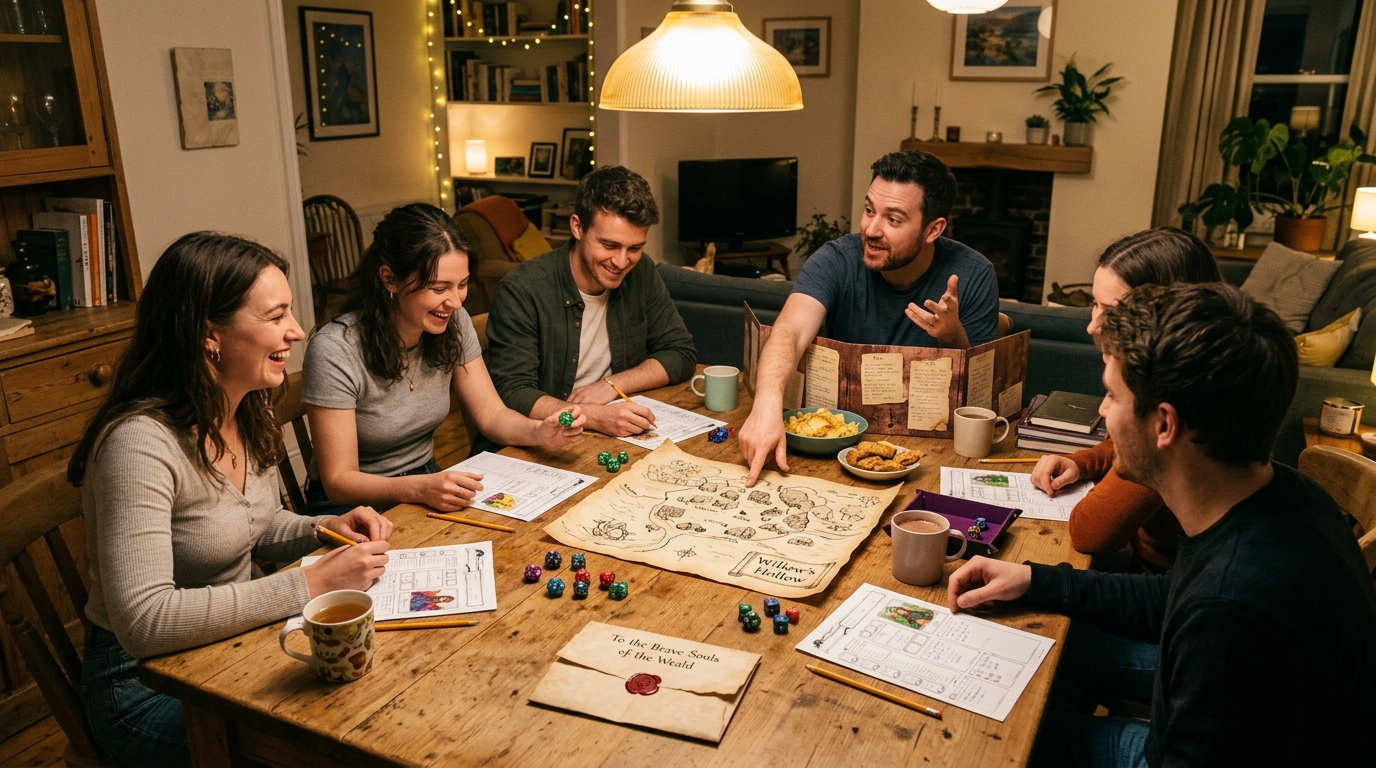
Do not ask your friends to care about your campaign before they have had a chance to enjoy playing it. Invite them to try a short, low-pressure adventure with a clear ending, let them help choose the premise and tone, and make their choices matter at the table. Send no required homework, treat actual-play shows as optional inspiration, and explain the rules as you play. Curiosity is a good starting point: enthusiasm may grow after the first session, and it is normal for it to differ from yours.
The challenge is social, not creative
A first-time Dungeon Master often worries that friends are not interested enough, when the real gap is that nothing has happened at the table yet for them to be interested in. You may have spent weeks building a homebrew world, a calendar, a playlist of videos, and an actual-play series you love, while your friends know almost nothing about D&D. That difference in preparation is normal and does not mean they will not enjoy playing.
This question is about initial buy-in, before anyone has rolled dice together. It is a different problem from keeping an existing group engaged with lore mid-campaign or making a session more engaging once play has started. Here the task is to offer a friendly invitation, make the first experience easy to say yes to, and find out whether your friends actually enjoy the game. Friendship should not depend on them agreeing to a year-long campaign.
Eight ways to make the first invitation work
Each of these lowers the cost of trying D&D without lowering what makes it interesting:
- Ask what sounds fun to them Offer a short menu before you pitch: mystery or humour, friendship or rivalry, exploration or combat, light or tense. Ask what kind of character sounds appealing and whether they prefer making one together or using a ready-made sheet. Be clear that playing is optional and that a no is respected.
- Pitch a try-out, not a saga Invite them to one or two sessions with a definite ending and an easy way to stop. A single objective for the evening is less daunting than signing up for an epic. Agree when you will play, how long the session lasts, and what happens if someone cannot make it.
- Remove required homework Explain the basic loop at the table: the DM describes the situation, the players say what they try, the DM asks for a roll when the outcome is uncertain, then describes what happens. Have pre-generated characters or a quick-start sheet ready. Videos and a favourite actual-play series can be optional inspiration; if someone wants a preview, share the D&D beginner guide as further help, not homework.
- Treat actual-play as inspiration, not a standard A streamed cast has experience, editing, and an audience to entertain. Your friends can describe what their characters do in their own words, take a moment to decide, or pass when unsure; none of that makes them worse players. Say so up front, especially if anyone seems shy.
- Use props as invitations, not obligations A small prop can make the fiction tangible, and revealing it during play is an easy default. If a friend is willing to try the game, you can also send an optional invitation or clue beforehand. Keep it simple and never make a prop a test of enthusiasm.
- Keep homebrew small and playable A My Little Pony-inspired friendship fantasy, or any setting you love, is fine if the group likes the premise. Start in one small location with a problem they can affect tonight; keep the wider setting in your notes until play gives the group a reason to explore it.
- Make the opening playable early in the session Begin with a concrete choice, a small mystery, or a request from an approachable non-player character. Give each person a chance to contribute through a decision rather than a performance test, and show a consequence quickly so choices feel real. Two to three leads, one conversation, and one meaningful decision is plenty for an evening.
- Ask what they enjoyed afterwards After the session, ask what was fun, what felt slow, and what they would change. Let the group choose whether to continue, adjust tone or frequency, or stop. Different levels of enthusiasm are normal. No reasonable method guarantees equal investment, and you should not judge less enthusiastic players for being honest about what they want.
Example
Worked example: the missing keepsake
A one-session friendship-fantasy opening for three to five new players at level 1. The harvest festival can go ahead even if the lantern is not found.
- Setup in one village square
- Bramble Hollow is preparing its harvest festival. The village's ribbon-bound lantern, lit together at dusk, is missing from the hall. Mara Finch, who tends it, knows Tamsin Reed at the old mill borrowed it to mend a cracked frame and has not brought it back; she tells the party if they ask. Mud tracks beneath the hall's open side shutter lead towards the mill. An orchard keeper's tale of a wind spirit began when a gust caught the lantern's ribbon as Tamsin carried it past the orchard. Sketch the square, orchard, hall, and mill.
- The invitation as a table prop
- As the session starts, Mara hands the party a short, sealed note across the table: three lines asking for help tonight, no lore attached. Tearing it open is the first small, physical choice. Players who enjoy props get a moment; players who do not simply read the text aloud and move on. The note does not require prior reading or a reply between sessions.
- Two to three leads, one conversation, one decision
- The party can inspect the hall, follow the prints, or ask the orchard keeper about the wind story. The shutter is open and the prints lead to the mill; either clue can point them towards Tamsin. The keeper says they saw Tamsin carrying the lantern that way, and explains how the wind caught its ribbon. At the mill, Tamsin is midway through repairing its cracked frame and is embarrassed to have kept it so long. Give these facts through sensible looking and conversation; no roll is needed to find the essential clues. Let the players choose who investigates, what they ask, and how they respond to Tamsin.
- How choices shape what comes next
- For example, the players might help Tamsin finish the repair and return the lantern before dusk, or tell Mara it will be late so she can light a substitute. They could also choose another approach. If they help, Tamsin might thank them later with a small carved token from the mill; the ceremonial lantern remains the village's. Mara can welcome them at the festival either way, with or without the lantern. End by asking whether they would like another outing; the story continues only if they do.
Before you invite friends to a first game
A quick practical recap:
- You have asked what themes and tone sound fun to them, and made clear that playing is optional.
- You are offering one or two sessions with a clear objective and ending, not an open-ended campaign.
- Ready-made characters and a simple rules reference are on hand; you can explain rolls as they come up.
- The opening has one small location, a playable problem, and an early choice with a visible consequence.
- You have a short, kind question ready for afterwards: what did you enjoy and do you want to continue, change, or stop?
Was this useful?
Use only what makes the first session easier
This answer is about a social decision and a short playable opening, not about filling a campaign. Codex Cryptica is most useful after friends have chosen to play, when you need a single small location and a handful of people with clear wants for that evening.
If you want a prompt for a starting problem or a quick name for an approachable non-player character, a quest or NPC generator can produce one to adapt, but you do not need a vault, a graph, or a library of tools to run a one-session try-out. Build only what the opening needs, then keep what the table actually used.
See D&D tools and guidesRelated
Topic Hubs
Tools
- Quest generator Turn a one-session premise into a patron, objective, and complication you can run tonight.
- NPC generator Create a friendly first-session contact with a clear want, without writing a full cast.
Guides
Other answers
- How do I start GMing for the first time?
- How do I start a D&D campaign?
- How do I run a successful Session 0?
- How do I get players to engage with my campaign world?
- How do you make a tabletop RPG session more engaging?
- What should a new D&D player know before their first game?
- What should a new D&D player learn first?
- How do I read a D&D character sheet as a beginner?
- How do I find a tabletop RPG group to play with?
- How do I get my RPG party to work together?
- Where do I start if I have never played a tabletop RPG before?