Framework
How do I run a rogue or scout without splitting the party?
Characters can be apart without excluding their players. Let the scout move ahead, but keep each solo beat short: resolve its uncertainty, then return information, pressure, or a choice to the group while they can still act. The rogue earns useful information, position, or access; companions can watch exits, prepare a diversion, or change the conditions outside.
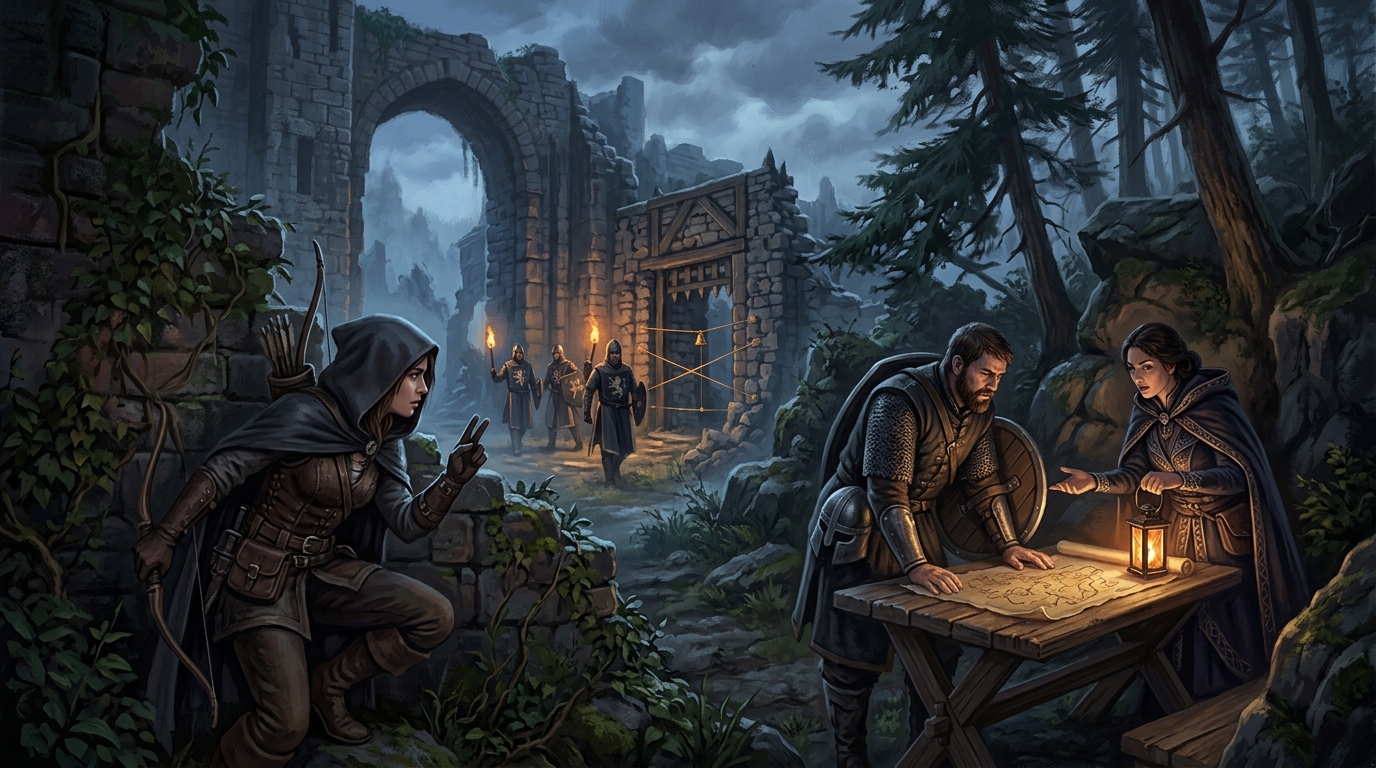
Scouting should create a choice for the party
A rogue can move ahead without splitting the players from the scene. The problem starts when the scout gets a long private sequence and everyone else loses meaningful decisions. Resolve reconnaissance in short beats that return information, pressure, or choices to the group.
Give the scout a focused question: where do the guards change watch, is the side entrance trapped, or what lies beyond the courtyard? The scout's expertise should earn a real edge, while the discovery leaves the group with something to decide.
Use a short scouting loop
Cut back to the group when the scout learns something actionable, the risk changes, or another character can meaningfully affect what happens next:
- Set the question Agree what the scout wants to learn, how far ahead they will go, what signal means they need help, and where they will fall back.
- Show the approach and risk Describe the route, patrol, obstacle, or deadline. Let the player choose where to move and what risk to take before asking for a roll.
- Resolve the uncertainty Use the game's rules for the meaningful uncertainty. Summarise routine movement through a place the party has already made safe instead of rolling it step by step.
- Return useful information Tell the group what the scout learns while there is still room to act. A patrol change matters before the party chooses its route, not after the alarm is raised.
- Let the party change the next beat The others can distract a guard, cover an exit, hold a door, identify a symbol, or choose another route. Their decisions affect what the scout can safely attempt next.
Keep traps and locks from becoming solo gates
Let the scout's expertise reveal access, information, or a safer option: where a trap's trigger sits, what it protects, or how to disarm it. Then give the group a decision, such as whether to disarm it, find another route, trigger it from a distance, or use it against a pursuer. Failure can spring the trap, cost time, or reveal the scout without erasing every other option.
Treat locks the same way. Compress routine openings when nothing can change; when a lock matters, show the risk and let the group decide how to help, find another entrance, or spend time forcing it. The rogue remains distinctly competent without making every obstacle a solo gate or requiring everyone to handle it.
Some players enjoy private scouting scenes and some prefer everyone to hear the same information. Check what this table likes. When a detail must remain secret from the characters, keep the private exchange short and bring play back to a shared pressure or decision.
Let a bad result change the situation
A failed roll should make the next choice different, not remove the scout from the adventure:
- Suspicion rises A guard hears movement and changes patrol, or a servant notices a door left ajar. The scout can hide, withdraw, bluff, or signal the party before the location is fully alerted.
- The trap springs The scout triggers a bell wire or pressure plate. It costs time or a useful tool and gives their position away, but also reveals what the hazard protects. The party can decide whether to draw the guards off, help the scout retreat, or switch routes.
- Danger reaches the scout A guard spots the rogue or a trap wakes something nearby. Do not run rounds of the scout alone against the garrison while everyone else waits. Give the scout a chance to break contact or fall back to the agreed point, and bring the alarm or pursuit to the group so the players can choose whether to hold a doorway, set an ambush, or abandon the route.
- The route closes A gate is barred or a stair is watched. The scout reports another way in, but it costs a favour, exposes the group, or leaves less time for the next step.
Example
Worked example: the ruined keep
The party needs to enter a ruined keep and recover a banner before the local reeve's men arrive. The rogue scouts towards a side entrance while the others wait among the pines.
- The isolated version
- The GM and rogue play through each corridor with separate stealth, perception, and trap checks. The scout spots two guards and a wire across the side entrance, but returns only after the reeve's men arrive. The information comes too late for the other players to decide whether to wait, make a diversion, or take another route.
- The shared scouting scene
- The rogue sees the two guards trade posts and finds a wire connected to a bell inside the entrance. One guard will soon check the courtyard, giving the scout a brief chance to approach or withdraw. The rogue uses the agreed lantern signal from the broken wall, then reports the patrol and trap at the pines. The party can distract the guards, follow the rogue through the entrance, wait for the next change, or try the broken wall instead. If the scout's approach goes wrong, a guard hears a stone shift and heads towards the side entrance. The rogue falls back to the pines, where the party can choose to draw the guard away, prepare an ambush, or abandon that route. Any fight now begins with the group able to act, and the players may still avoid it.
- Why it works
- The scout finds something their expertise makes possible, and the information reaches the others before the opportunity passes. A poor result raises the danger but leaves the scout choices and gives the rest of the party a way to respond.
Before the scout moves ahead
Keep the objective narrow and the group involved:
- What is the scout trying to learn, and what edge does their expertise provide?
- What can change while they act, and what signal or fallback keeps them connected to the group?
- When do we cut back, before the information or opportunity goes stale?
- What can the party do with the information or to change the next beat?
- If a roll goes badly, what changes besides starting a fight?
- What routine action can be compressed instead of rolled out?
Was this useful?
Keep places, routes, and consequences connected
A campaign knowledge graph can connect a keep's entrances and hazards to its occupants, nearby allies, and the consequences of an alarm. Recording those links helps you bring a scouting discovery back into later play without deciding the party's response in advance.
Explore the RPG knowledge graphRelated
Tools
Other answers
- How do I give specialist characters spotlight without sidelining the party?
- How do I run spies and infiltrators in an RPG?
- How do I run an investigator or detective without making other PCs irrelevant?
- How do I get my RPG party to work together?
- How do you run a heist in a tabletop RPG?
- How do I run hackers or netrunners without splitting the party?