How to
What do I need to bring to my first D&D game?
For most first D&D games you need only your character, a way to roll dice, something to take notes with, and anything the Dungeon Master specifically asked you to bring. You do not need to buy rulebooks, expensive dice, miniatures or accessories before you have played. Many tables will lend you dice, explain the rules, or supply a ready-made character, so check what your group already covers before you buy anything.
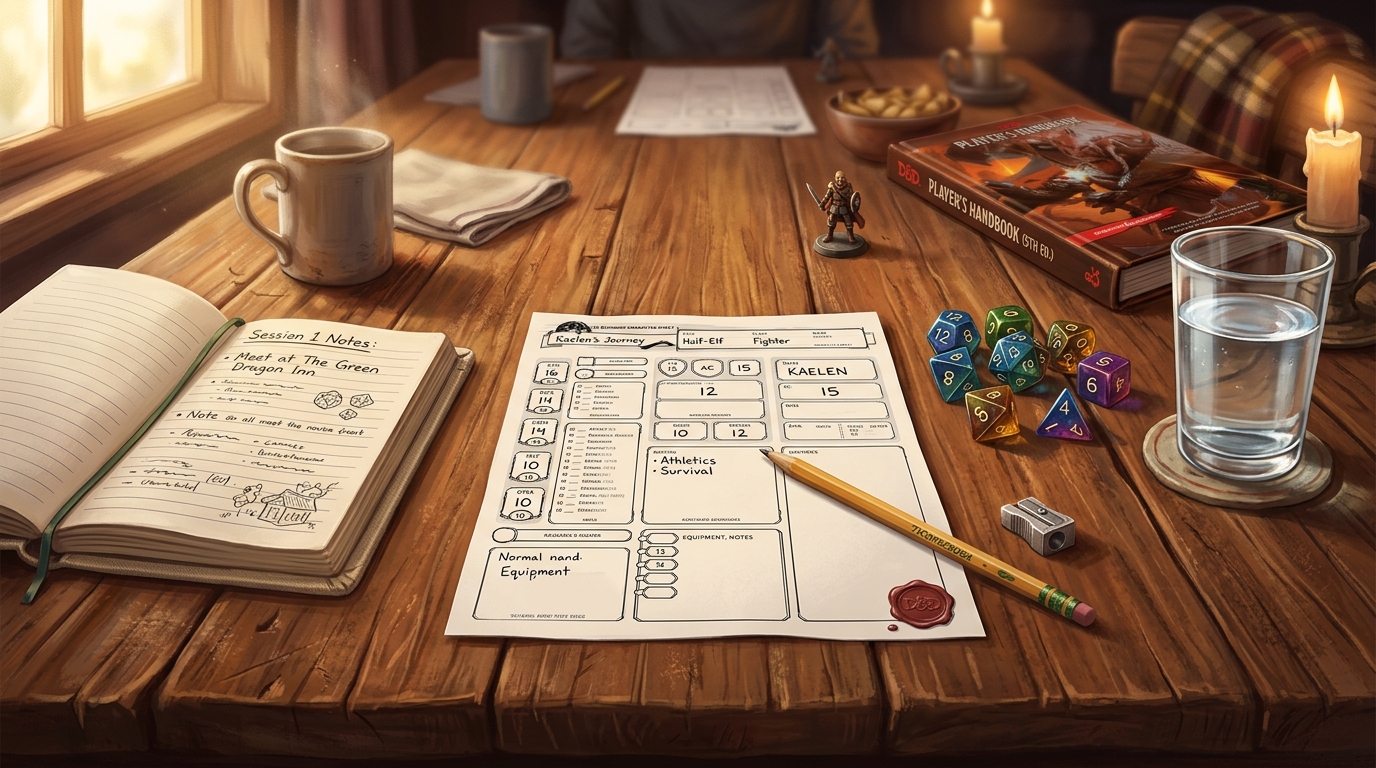
The barrier is smaller than it looks
New players often worry that D&D requires a large purchase or a full set of gear before the first session. In practice, most groups keep the first game deliberately light. The Dungeon Master brings the adventure, the other players bring experience, and your job is to arrive ready to participate, not ready to supply the table.
Expensive accessories do not make a first game go better. A borrowed set of dice works the same as a premium one, a phone or spare dice app can cover rolls if the group agrees, and a printed or digital character sheet the DM has approved is enough. If you are unsure what the table provides, a short message to the DM settles it faster than any shopping list.
Short checklist that covers most tables
Bring these basics, or confirm the table already covers them, and you are ready for almost any first session:
- Your character, as a printed sheet, a digital sheet, or a pre-generated character the DM supplied, with the key numbers you will actually use marked or highlighted.
- A way to roll dice: a single set of polyhedral dice, or an agreed digital roller if the group is happy with one.
- Something to write with: a pencil and scrap paper, or a notes app on your phone if the table allows devices.
- Anything the DM specifically asked you to bring, such as a virtual tabletop link, a headset for online play, or a particular app or reference.
- Water if you would like it, and anything else that helps you stay comfortable for a couple of hours.
What counts as essential, useful, or ask-first
It helps to separate what you genuinely need from what is nice to have and what varies by table:
- Essential for most first games A character the table has approved, a way to make its rolls, and a pencil or other note-taking method. If the group asks you to use a particular rules source or app, confirm how to access it. A short reference for your character's spells or features can help; ask the DM where to find it.
- Useful but not required A small notebook that fits beside your sheet, water if you want it, a charger or power bank if you are using a phone or laptop, and a one-page summary of your most common actions so you are not flipping through a book mid-scene.
- Ask your DM or host first Miniatures, battle maps, physical rulebooks, snacks and food arrangements, and whether phones or tablets are welcome at the table. Many groups already own these things and would rather you did not buy duplicates.
- Leave the purchase at home You do not need a full library of rulebooks, a premium dice collection, custom miniatures, or table accessories before trying the game. If D&D becomes a regular activity, you can decide later what is worth owning based on how your group actually plays.
If your first game is online
The essentials stay the same. Only the tools change:
- Quiet audio A headset or a mic that does not pick up the whole room makes it easier for everyone to follow conversation, especially in larger groups.
- Stable connection and links Join from a place with reliable internet and have the invite links ready before the start time: the virtual tabletop, voice chat, and any shared character keeper the group uses.
- Character ready beforehand If the group wants characters ready beforehand, open your sheet and check any required login. If you are making characters together or using a supplied character, confirm that arrangement instead.
- A way to take notes that does not mute you Keep a small text file or paper nearby. Typing in the same device that carries voice can trigger push-to-talk issues, so test your setup before the session if you can.
Example
Worked example: two ways to prepare for the same first session
A new player has been invited to a home game. The DM confirms they will supply a suitable level-one pre-generated fighter and spare dice, and the group plays in person around a kitchen table.
- Over-prepared and out of pocket
- The player buys the core rulebooks, a premium metal dice set, a miniature before choosing a character, and printed battle maps. The table already has these supplies, so the purchases add cost without adding anything needed for this session.
- Ready without extra shopping
- The player confirms the supplied fighter is suitable, borrows the offered dice, brings a pencil and a small notebook, and notes their main attack and any feature they want help using. They check whether snacks are shared or brought individually.
- Why it works
- Checking first confirms the DM will provide both a suitable character and dice, so the player can join in without extra spending. They can describe what their character tries, roll when asked, and note the names the DM mentions.
Before your first session
Once the group has confirmed what it supplies and any requested preparation is ready, no further shopping or homework is needed:
- Message the DM: do I need dice, a printed sheet, or a link, and is there anything I should read beforehand?
- Check that your character sheet is the version the DM approved and that your main attack, spell, or feature is easy to find.
- Pack a pencil, a few sheets of paper or a notes app, and a way to roll if the table does not supply one.
- For online games, test your mic, invite links, and any required login before play, when you can.
- Know how snacks, drinks, and table devices are handled so you match the host's expectations.
- Plan to ask questions like where is that on my sheet, what do I roll, or can I try this, when they come up in play.
Was this useful?
Keep the first session light, organise later
Codex Cryptica is not something you need to set up before your first game. Play first, then decide what you want to keep: the characters you met, the locations the DM described, and the questions you left unanswered are a natural place to start.
After a session or two, a vault can hold those details as linked notes so you recognise returning names. If you want a name for your own character, a fantasy-name generator can help; for a first game, the priority is the short checklist above, not extra tools.
Explore Codex Cryptica for D&DRelated
Topic Hubs
Tools
Guides
Other answers
- What should a new D&D player know before their first game?
- How do I read a D&D character sheet as a beginner?
- What should a new D&D player learn first?
- Where do I start if I have never played a tabletop RPG before?
- How do I run a successful Session 0?
- How do I find a tabletop RPG group to play with?