Framework
What’s the difference between gods and demon lords in a fantasy world?
A god and a demon lord need not differ in raw power. Decide what each being is, where its power comes from, and how it relates to cosmic law and mortal followers: a god might hold a recognised office over pestilence, while a demon lord of worms feeds on plague and commands a cult through bargains. Their portfolios can overlap without either title becoming meaningless.
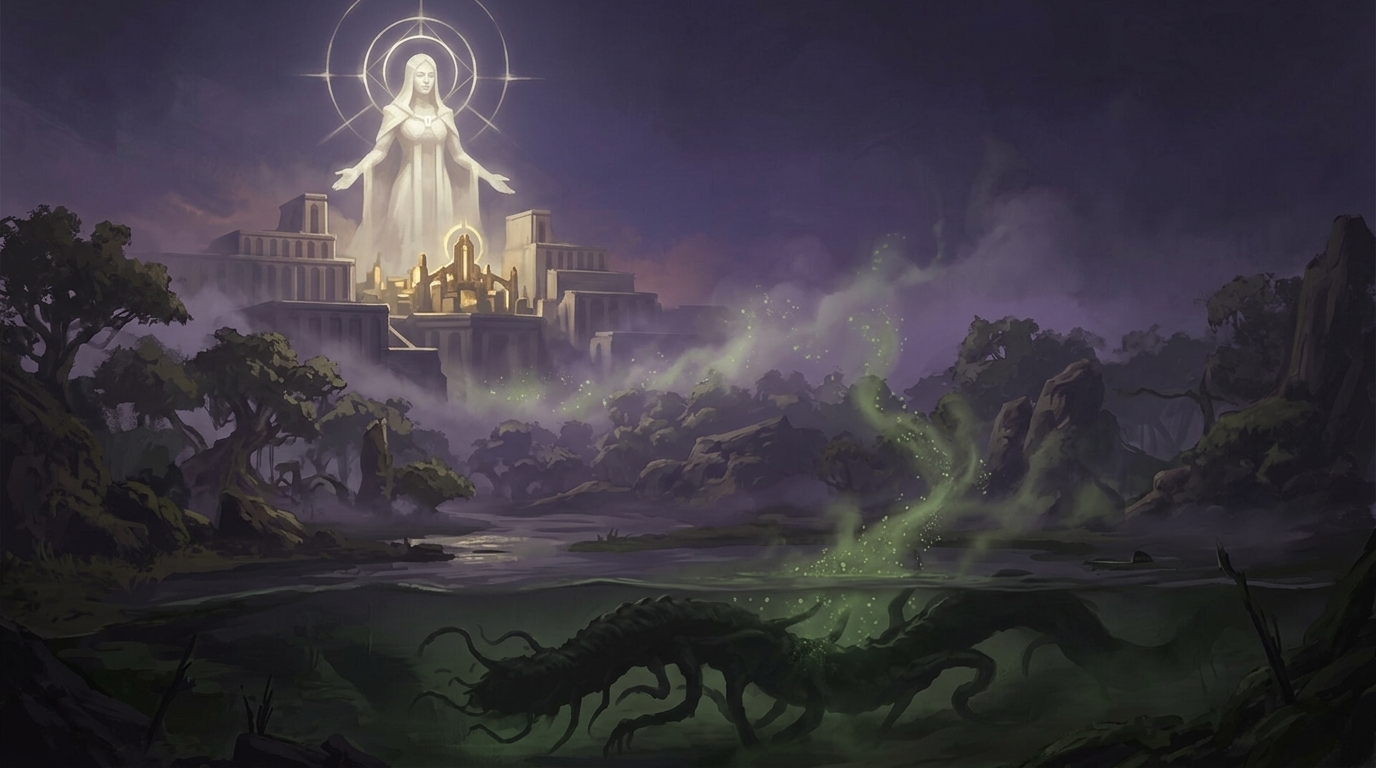
Titles can describe nature, office, or reputation
If both beings have followers, grant magic, and command a supernatural domain, a strength ranking will not give you a useful distinction. Decide what the names mean in your setting. God might be a recognised cosmic office, a kind of being, a relationship created by worship, or simply the title mortals give to an overwhelming power. Demon lord might describe a native of a lower plane, a ruler who has gathered other demons, a corrupter of souls, or an enemy of the recognised cosmic order.
These definitions can overlap. An archfey may be ancient without holding divine office; a primordial may shape a world without wanting worship; a demon lord may receive prayers without being a god. Write down the rule that matters at your table, then let cultures disagree about what to call the beings they encounter.
Choose the distinction that drives play
Use one clear difference as the foundation. Other differences can follow from it, but they do not all need to apply:
- Source of power A god may draw strength from worship, an innate nature, a cosmic office, or a law of creation. A demon lord may feed on souls, fear, bargains, corruption, or energy from its plane. Decide whether followers create power, replenish it, or merely give it a path into the world.
- Authority and influence A god might formally hold the office of death, seasons, or pestilence, with cosmic rules recognising its claim. A demon lord may exert immense influence over part of that domain without any recognised right to it. Authority can carry duties and limits; influence can be potent but contested.
- Relationship with mortals A god's temple may organise public worship, rites, and obligations. A demon lord may prefer secret cults, possession, sacrifice, and private bargains. Either can act as patron or threat, and either can have sincere devotees alongside opportunists.
- How magic is granted Both can empower a priest or champion. A god might answer through an office that makes certain rites work, while a demon lord lends power under a contract, marks a servant, or lets a cult draw on its plane. The visible spell can be identical; the cost, conditions, and consequences reveal the difference.
- Death and succession A god might be impossible to kill but possible to depose, or its office might pass to whoever fulfils a cosmic condition. A demon lord might reform in its home plane, lose its followers, or be replaced by a rival who takes its throne. Decide what can end, what can transfer, and what evidence mortals would see.
- Cosmic legitimacy Perhaps the cosmos recognises gods through a compact, court, or set of laws. Perhaps godhood is a title granted by worshippers, or a name mortals use for any being powerful enough to answer prayer. Each model changes who can challenge a claim and whether divine status can be proven.
Example
A god of pestilence and a demon lord of worms
Both beings shape epidemics in the same river kingdom. Their shared subject creates conflict, while the rules behind their power keep them distinct.
- The god of pestilence
- The god holds the recognised office of contagion. Its priests can name a plague, read its signs, and perform rites that slow its spread, but the god cannot simply erase every outbreak without breaking the balance that lets diseases run their course. Public temples keep records and tend the sick, so the office carries obligations as well as authority.
- The demon lord of worms
- The demon lord has no office over disease. It feeds on the dead left unburied and can turn a corpse into a nest of obedient worms. Its cult promises protection from infection in exchange for bodies delivered to hidden pits. That offer is useful during a famine, but each bargain makes the next outbreak harder to contain.
- What the players encounter
- When the party reaches a flooded village, the temple asks them to recover its stolen burial register before the next rites. A local healer instead offers the cult's cure, which works quickly but leaves pale worms beneath the patient's skin. The characters must decide whom to trust before either power is reduced to a simple monster or a benevolent patron.
- Why it works
- Pestilence and worms overlap, but one being holds a cosmic office with public duties while the other exploits the consequences through predation and bargains. The distinction produces choices, visible costs, and room for followers to disagree about what help is worth accepting.
Overlapping portfolios are useful
Domains do not need exclusive owners. A god of pestilence and a demon lord of worms can coexist, just as several powers may have claims over war, death, or the sea. Give the overlap a consequence: competing rites, a disputed boundary, rival explanations for the same event, or a mortal community caught between their followers.
For each being, record its nature, source of power, claim to authority, terms of contact, and what happens if it dies or loses its position. If two entries produce the same answers, make one distinction sharper or let the cultures' rival names be the point.
Set the rules before the first divine intervention
Answer these questions in your setting notes:
- What does god or demon lord mean to the cosmos, and what do ordinary people mean by each title?
- Where does each being's power come from, and what can weaken or increase it?
- What does a follower do to receive magic, and what can the patron demand in return?
- Can either being die, lose a domain, or pass its role to another?
- Where do their portfolios overlap, and what conflict can the characters witness because of it?
Was this useful?
Keep divine claims connected to the people affected
A cosmology becomes playable when its claims reach temples, cults, laws, settlements, and the characters who depend on them. In Codex Cryptica, link each power to its followers, rites, rival claims, and consequences so a change in one part of the setting has somewhere to lead.
Explore fantasy worldbuilding in Codex Cryptica