Framework
How do you make a boss fight memorable in a tabletop RPG?
A memorable boss fight is a payoff encounter, not merely a harder combat encounter. Connect the fight to earlier campaign material, give the villain an objective beyond surviving, create multiple simultaneous problems for the party, let phase changes alter play rather than just refill the boss's HP, reward preparation and earlier player choices, and show visible consequences when the fight ends.
Why boss fights feel flat
The most common boss fight fails not because the monster stat block is weak but because it asks nothing of the campaign. The villain waits in a room to be killed. The terrain is scenery. The objective is 'reduce HP to zero'. The aftermath is 'session ends'.
A finale feels climactic because it resolves accumulated tension, not because the stat block is larger or the hit points are higher. Encounters that matter are rooted in things the players already know and care about. They create urgencies beyond combat math. They make the party's choices before the fight change what happens during it.
The framework for a campaign payoff
Shape a boss encounter around these six principles:
- Make the fight pay off earlier campaign material The villain, stakes, location, allies or weaknesses should connect to things the players already know. A rebel commander from five sessions ago, an artefact they've been chasing, a location they helped defend, a weakness they discovered, a prophecy that's come to pass: use accumulated knowledge to make the final encounter feel inevitable rather than random. The antagonist's motives, history and connections should feel coherent with the campaign.
- Give the boss an active objective The villain should be trying to accomplish something during the fight, not standing in a room waiting to die. The objective might be to complete a ritual, escape with an artefact, hold a position until reinforcements arrive, corrupt or kill a specific NPC, activate a weapon or destroy evidence. An active objective creates urgency, splits the party's attention and generates alternative victory or failure states beyond just killing the boss.
- Create multiple simultaneous problems Give players real priorities rather than a single enemy to attack. Protect civilians whilst fighting. Destroy ritual anchors that empower the boss. Break control crystals. Stop the bridge from collapsing. Free an ally. Prevent reinforcements entering the chamber. Each objective should create a genuine tactical or narrative choice, not be a chore that merely consumes actions.
- Let phases change the situation, not just refill HP If the fight has multiple phases, each should fundamentally alter play. The terrain shifts, the objective changes, the villain's behaviour changes, a hidden weakness becomes relevant, an ally switches sides, collateral consequences escalate or the battle moves to a new location. Avoid the weak pattern of 'the boss reaches zero HP and gets another health bar' unless it genuinely transforms how the fight plays.
- Reward preparation and earlier player choices Make actions taken before the fight materially affect the finale. Destroying the necromancer's phylactery removes a resurrection phase. Recruiting a rebel captain removes or converts enemy reinforcements. Learning the dragon fears bells creates an exploitable opening. Discovering a secret entrance changes where the fight starts. Sabotaging the villain's supply chain removes an asset. The finale should make the campaign feel like it remembers what the players did.
- Make victory visibly change the world Do not let the fight end at 'the boss dies, session over'. Show the immediate consequence. The army breaks and routes. The ritual collapses. The city reacts to the villain's death. A faction splinters or a prisoner takes control. The villain's death creates a new problem the party must address. The aftermath is part of the payoff.
The counterpoint: do not protect the boss from a clever plan
A critical warning sits alongside all of this. If the players spend several sessions creating the perfect assassination and kill the villain in round one, that can be an excellent climax. If they use a clever plan to bypass the prepared encounter, let them.
Do not secretly inflate HP because the boss is dying too quickly. Do not invent immunity to the party's successful plan. Do not add an unforeshadowed second form solely to force the encounter to last longer. Do not invalidate preparation so you can use every prepared ability.
The objective is payoff, not ensuring the encounter lasts a predetermined number of rounds. Consistency with earlier sessions and honest use of the numbers you set before the fight began matter more than running the prepared content as written.
Example
A flat boss encounter versus a payoff encounter
Consider how the same villain plays out with minimal scaffolding versus one connected to the campaign.
- Flat version
- The lich waits in a throne room. It has high HP and a powerful stat block. Two guards stand nearby. The room has no particular features. The fight ends when the lich's HP reaches zero.
- Payoff version
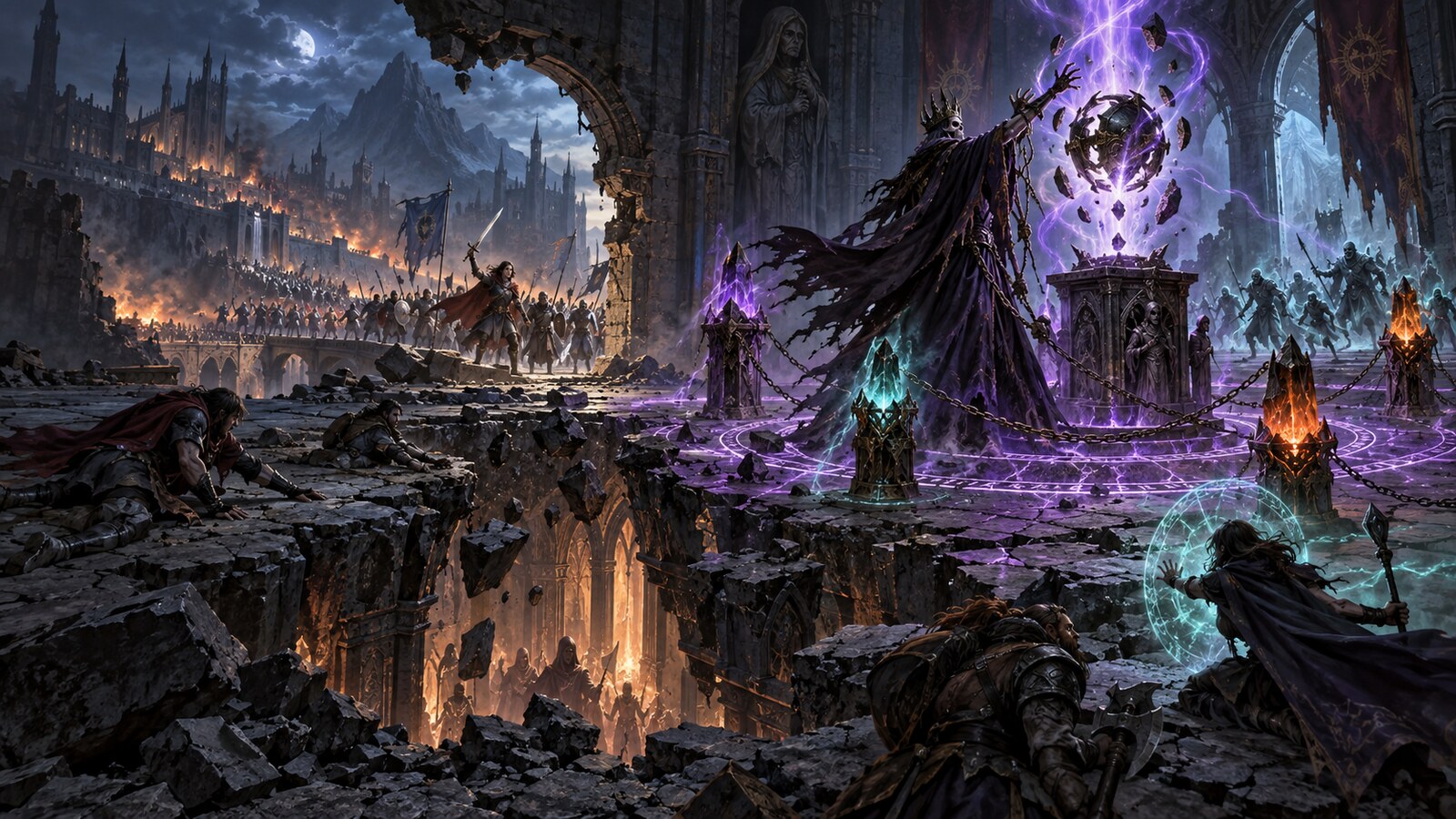
- The lich is completing a ritual that will drain the city's life force whilst its defenders hold off the party's allies outside. Destroying ritual anchors placed throughout the chamber weakens the lich but costs the party actions. The lich attempts to escape by gate spell if the ritual fails. A weakness the party discovered three sessions ago (salt from a specific river) can interrupt the lich's signature ability but the players must remember or re-derive it. Collapsing terrain forces movement and creates cover. An NPC the party recruited holds a fortified position to delay enemy reinforcements. If the ritual completes, the lich becomes nearly unstoppable; if the party stops it, the death magic already released causes immediate collateral damage the party must contain. Victory immediately changes the political situation: the city's councils splinter, the lich's phylactery remains hidden somewhere in the world, and a survivor seeks vengeance.
- Why it works
- The flat version is mechanically playable but narratively disconnected: the boss has no purpose beyond fighting, the party's earlier actions don't matter and the ending is arbitrary. The payoff version weaves together earlier discoveries, stakes the players care about, multiple simultaneous objectives, phase changes that alter play and visible consequences. The victory feels earned because it resolves campaign tension, not just because someone rolled well.
Before the boss fight: prep checklist
Review this before sitting at the table:
- Can the party identify the boss or its motives from earlier campaign events? If the antagonist is a total stranger, where does the connection live?
- What does the boss actually want to accomplish this round? Write it down so you don't forget under pressure.
- What are at least two things the party must do beyond 'kill the boss'? What makes them matter?
- If the fight has phases, does each phase change something about play beyond numerical damage thresholds?
- What earlier player decisions materially change this fight? (Research, recruitment, sabotage, discovery.)
- What happens immediately after the boss dies? Not the campaign aftermath, but the next round of play.
- Can the party kill the boss by clever means faster than designed? Is that actually fine by you? (It should be.)
Was this useful?
Connecting a boss fight to your campaign world
The Encounter Generator can produce a starting point fast. More importantly, the BBEG Generator and Villain Generators give an antagonist motive, history, connections and vulnerabilities worth building into the fight itself. When the boss carries concrete goals, allies and weaknesses from your campaign graph, the framework above becomes much easier to apply.
If a boss fight is the payoff for a multi-session arc, building that arc in Codex makes the connections obvious: factions the party recruited, artefacts they've discovered, locations they know, earlier encounters with the villain. These are the material you layer into a memorable fight.
Try the BBEG generatorRelated
Tools
- BBEG and Campaign Villain Generator Develops the antagonist's motives, connections, history and weaknesses so the fight resolves something that matters.
- Encounter Generator Produces participants and terrain. Layer the framework above on top of a generated encounter to add payoff and stakes.