Framework
How do you make NPCs memorable without lots of prep?
NPCs become memorable when defined by playable surface cues rather than hidden backstory. Instead of writing paragraphs of history that players never discover, give each non-player character five immediate elements: an urgent concrete want, an observable physical mannerism or vocal cadence, a sharp internal contradiction, an existing relationship hook, and one striking sensory detail.
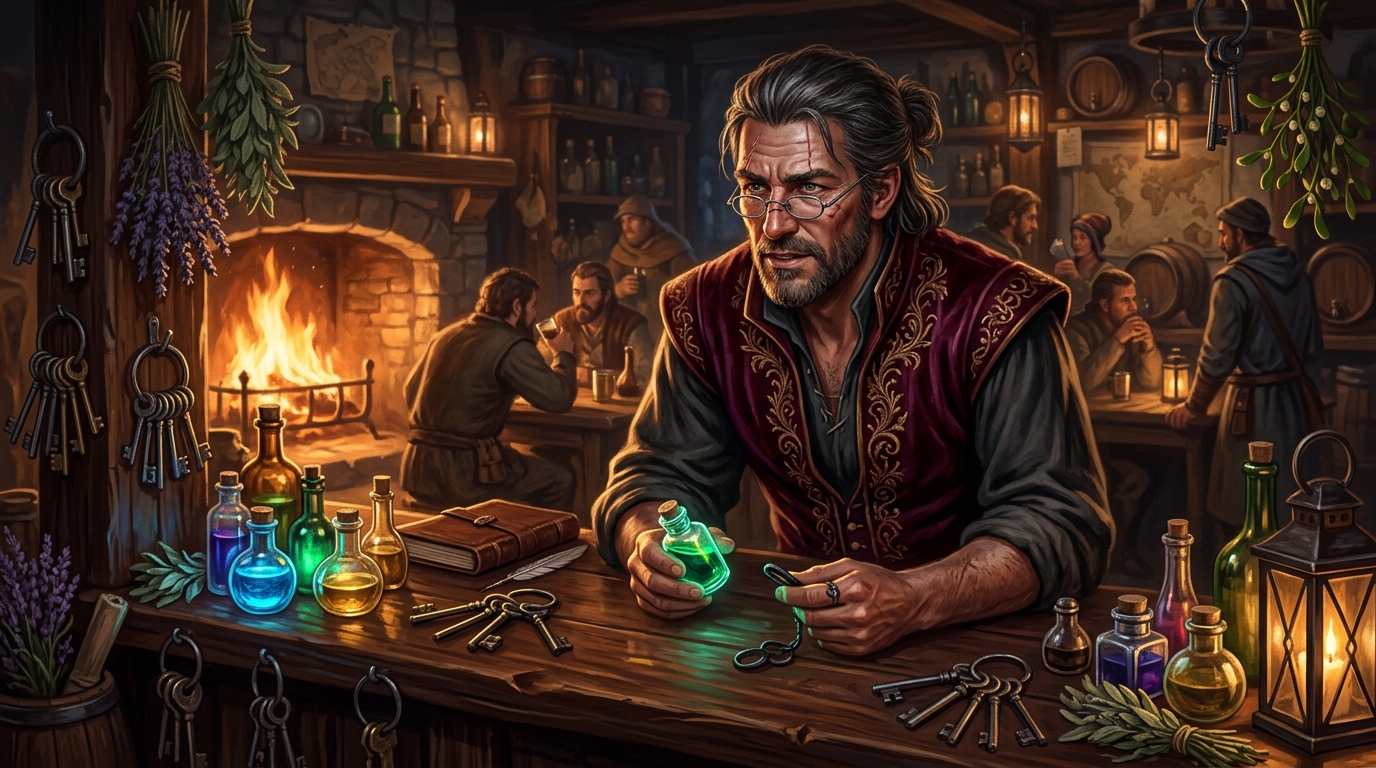
The backstory trap: why biographical prep fails at the table
Many Game Masters believe that bringing an NPC to life requires extensive biographical prep: childhood histories, lineage charts, and multi-paragraph personality profiles. At the table, almost none of this prep surfaces. When the party stops at a roadside trading post, a three-page dossier explaining the merchant's deceased uncle and childhood apprenticeship remains trapped behind the GM screen. Players do not experience an NPC's past; they experience how the character speaks, what they demand from the party right now, and how they react under pressure.
Prep that cannot be demonstrated in sixty seconds of dialogue is dead weight. By trading exhaustive historical exposition for sharp, observable behavioural cues, you can forge characters that players remember and quote months later, all recorded on half an index card.
The five-element memorable NPC anatomy
Whenever you create an NPC, whether during prep or improvised mid-session, jot down these five concrete hooks:
- An immediate, concrete want What do they desire from this scene or from the party right now? It should be urgent and tangible: coin to settle a tavern tab, protection from a debt collector, quiet to finish their ledgers, or gossip regarding a rival merchant. An NPC with an active want drives the scene forward automatically.
- An observable physical mannerism or vocal cadence A physical habit you can execute without vocal strain: constantly polishing spectacles with a silken cloth, tapping an ink-stained quill against their knuckles, speaking in clipped hushed whispers, or never breaking unblinking eye contact. A simple physical trigger anchors your portrayal instantly.
- A sharp internal contradiction Break archetype fatigue by giving the character one trait that seems at odds with their occupation or appearance. A ruthless mercenary captain who tenderly cultivates exotic orchids; an austere temple inquisitor with rough sailor tattoos who swears under their breath; a terrifying underworld fence who is visibly petrified of dogs.
- An existing relationship hook Anchor the NPC to the existing web of your campaign. They should owe a debt to a local faction, be the estranged sibling of a known town guard, or carry a grudge against a patron the party has met before. This transforms an isolated merchant into a window into the wider setting.
- One vivid sensory tag Give the players one sensory detail that sticks in memory: the sharp aroma of dried clove tobacco, a notched canine tooth, heavy brass rings clinking softly against an ale mug, or an oversized patchwork velvet coat. When you mention the clove tobacco two sessions later, players will immediately remember who is standing in the doorway.
Example
The local blacksmith: before and after
Compare how two different preparation styles translate into real gameplay when an adventuring party visits a town armourer.
- The biographical approach
- The GM writes 600 words detailing Master Brom's apprenticeship in the capital, his honourable military discharge twenty years ago, and his neutral good alignment. In the session, the GM scans the wall of prose, panics under time pressure, and delivers Brom as a generic gruff blacksmith who offers standard weapon prices from the rulebook.
- The five-element framework
- The GM writes five bullets: Want (needs 40 lbs of quality bog-iron before the baron's bailiff arrives on Morndas); Mannerism (taps tongs rhythmically against his leather apron while listening); Contradiction (faint of heart around blood, turning pale if a PC enters with an open wound); Relationship (secretly sells discounted lockpicks and pitons to the local riverside smugglers); Sensory (smells of elderberry wine and charred oak; wears a chipped jeweller's loupe).
- Why it works
- In thirty seconds of table time, Brom is distinctive, funny, and morally complicated. When an injured fighter asks for repairs, Brom turns green, insists on a glass of elderberry wine, and offers a discount if the party can 'procure' iron without the baron finding out. He feels like a living person woven into local intrigue.
Improvising NPCs when players veer off script
When players unexpectedly interrogate an unnamed city clerk or kidnap a random sentry, resist the impulse to pause the game and write a full character sheet. Pick a name from a pre-generated roster, roll or choose an immediate want and a mannerism, and introduce them through action.
If the party ends up adopting the NPC or returning to them regularly, you can flesh out their deeper loyalties and faction ties between sessions. Let the players' interest dictate which characters earn extensive campaign integration.
The 60-second NPC prep checklist
Before introducing any non-player character, confirm you have:
- A clear, immediate desire they want from the current interaction.
- One small physical habit, gesture, or vocal cadence you can reproduce every time they appear.
- One unexpected trait or contradiction that subverts their archetype.
- At least one link of debt, family, or rivalry tying them to another entity.
- One distinct sensory detail (scent, sound, or physical mark) that anchors memory.
Was this useful?
Connecting characters into your campaign lore graph
NPCs become legendary when their quirks, debts, and loyalties reverberate across your wider world. Codex Cryptica lets you track non-player characters as distinct entities connected visually to factions, locations, and campaign timelines.
Use our free NPC generator to instantly roll characters with built-in motives, mannerisms, and contradictions, then anchor them straight into your persistent vault.
Try the NPC generatorRelated
Tools
- NPC generator Generate characters with instant motives, distinct mannerisms, and regional hooks.
- D&D NPC generator Tailored NPCs for 5th edition campaigns with personality traits and equipment.
- Faction generator Create the organisations, guilds, and syndicates your NPCs belong to.
Guides
Other answers
- How do you organise NPC relationships?
- How much prep do you need for an RPG session?
- What makes a good random encounter?
- How do you prep a weekly RPG session quickly?
- How do you create a magic system?
- How do you start worldbuilding from scratch?
- How do you improvise NPCs on the spot?
- How many NPCs does an RPG town need?
- How do you keep track of NPCs in a long campaign?
- How do you help players remember what happened in a TTRPG campaign?
- How much campaign lore should players be expected to remember?
- How do you run a scene with multiple NPCs without talking to yourself?
- How do I make roleplay more engaging in a tabletop RPG?
- How do I roleplay NPCs if I'm not good at acting?
- How do I portray a believable modern city in an urban RPG?