Framework
How do I make combat faster without making it less exciting?
Speed up the gaps around combat decisions, not the decisions themselves: show the initiative order, tell the next player they are up soon, and let everyone plan while another turn resolves. Reduce GM bookkeeping with grouped initiative, average damage, and fewer distinct enemy abilities; give the fight an objective and a changing battlefield; then let enemies retreat or surrender once the outcome is clear. Players still get consequential choices, with less time spent waiting for them.
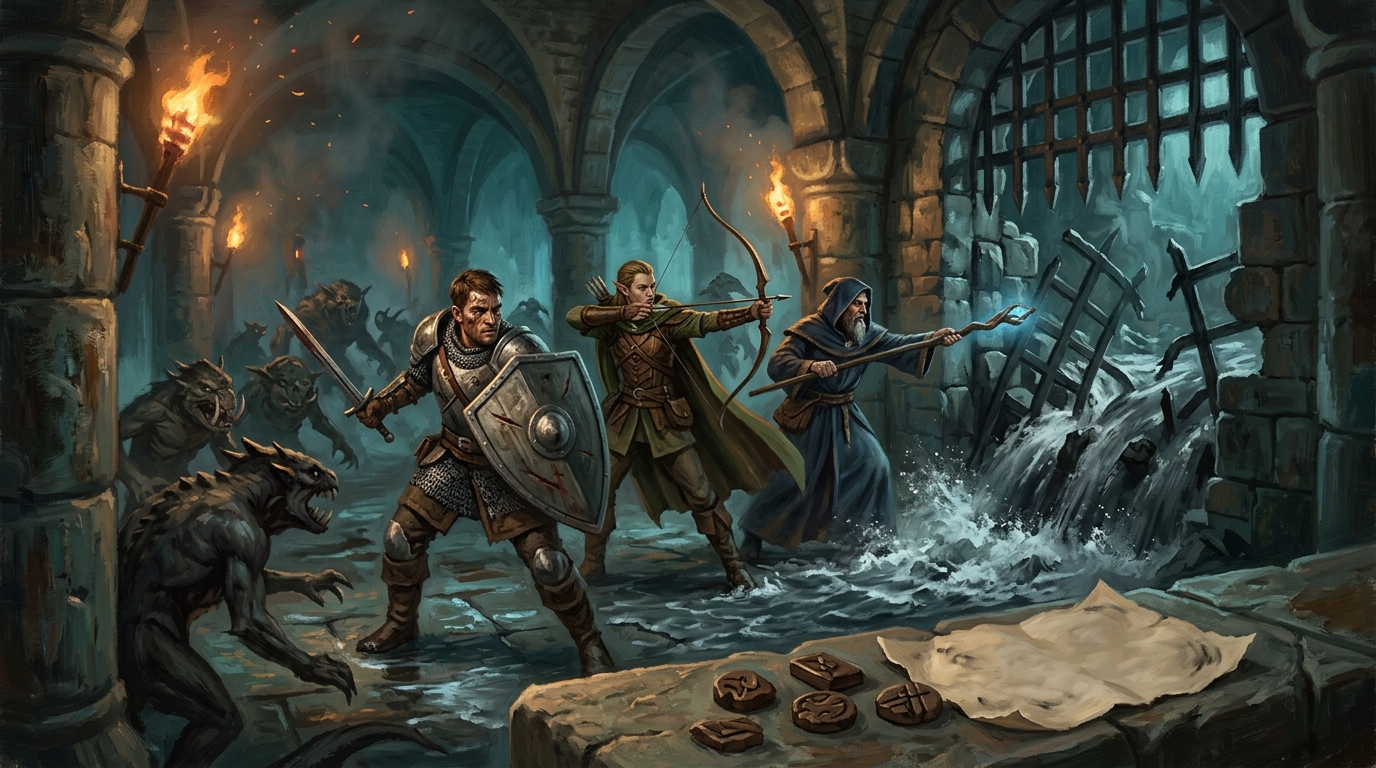
Cut the waiting around a turn
A slow round often comes from pauses between turns: a player discovers it is their turn, rereads a spell, asks what is in reach, then starts weighing options while everyone waits. Removing those pauses gives each player more time in the session without requiring hurried decisions or a timer that punishes a new player for learning.
Put the initiative order where the whole table can see it and say, "Mara is up, Joren is next." Invite the next player to think while the current turn resolves. Make it clear that planning is welcome and that they can change their mind if the battlefield changes. If a player is stuck, ask what they want their character to accomplish, then help translate that intention into a legal action.
Keep the choices, trim the handling
Before simplifying the fight, identify which choices make it tense. Keep those in view and reduce the bookkeeping around them:
- Make the order legible Use a visible tracker and announce who acts now and who follows. Avoid making players ask when their turns are coming.
- Group routine opposition Similar enemies can share an initiative count when the system permits it. Resolve their movement and attacks together, while keeping their positions and individual conditions clear enough for player choices to matter.
- Use average damage where it helps For minor enemies, the listed average can replace a separate damage roll if that fits the system and your table. Keep the consequential rolls, such as a dangerous hit or a player character's attack, in the open when the uncertainty is part of the fun.
- Limit enemy rule load A fight can feel varied through position, urgency, and a few clear abilities. Several enemies with different reactions, conditions, and exceptions ask the GM to make too many separate decisions each round, especially against a large party.
- Give the fight a job Rescue a captive, hold a doorway, stop a ritual, or escape before a bridge gives way. The objective gives players a tactical reason to act and tells everyone what can end the encounter besides defeating every enemy.
Let the battlefield create the next decision
Attention drifts when each round repeats the same question and the same answer. Change one visible part of the situation: smoke closes a route, an enemy drags a hostage towards an exit, a bell brings a guard closer, or a bridge begins to fail. Show the change clearly, then let players decide whether to respond. A changing situation creates urgency without asking anyone to rush their turn.
Scale the opposition to the table's attention as well as its combat strength. A seven-player group already has many turns and perspectives to resolve. It may need fewer enemies with simpler turns, not a matching crowd of monsters. Give each opponent a readable role or purpose so players can decide who matters and why.
For newer players, keep a short reference of their common actions and spells within reach. Help them learn a rule at the moment it matters, and offer a small set of options when they ask for guidance. As the group gains confidence, they can take on more of the rules lookup and tactical planning themselves.
Example
Worked example: the signal tower
The party is fighting guards in a signal tower while a runner tries to light a warning beacon. The players enjoy tactical combat, but the fight has begun to bog down.
- The slow version
- Each guard rolls initiative and damage separately. The GM answers the same range and line-of-sight questions several times. Players wait for their turns, and after the runner reaches the beacon the group still has to defeat every guard before the scene can move on.
- A brisker version with the same stakes
- The guards act on one initiative count, with average damage for their routine attacks. The visible order names the next player while the current turn resolves. At the end of the round, the runner reaches the staircase and the beacon's flame catches; the party can stop the warning by reaching the roof, or choose to fight a retreating guard below.
- Why it works
- The players still choose who to block, whether to pursue, and how to stop the warning. The GM handles fewer separate turns, and the changing objective makes those choices urgent. The fight ends when its dramatic question is answered, even if some guards are still standing.
End when the outcome is already clear
When the enemy has lost its reason to fight, do not require a clean-up round for every last hit point. A frightened group may run, a mercenary may surrender, or the remaining guards may scatter after their captain falls. If the party has already won the objective and no danger remains, describe the quick mop-up and move to the consequence.
Faster is not automatically better. Tactical combat can be a highlight precisely because the group considers its options, takes risks, and sees those choices change the scene. The aim is to reduce passive waiting and bookkeeping while leaving room for the decisions your players enjoy.
Before the next fight
Prepare a few small supports before initiative begins:
- Put the initiative order somewhere everyone can see, and plan to call the next player early.
- Choose which similar enemies can share a turn and whether average damage suits their routine attacks.
- Write the fight's objective and the event that changes the battlefield in a sentence each.
- Give newer players a quick reference for their common actions, abilities, and spells.
- Decide what retreat, surrender, or morale looks like once the result is no longer in doubt.
- For a large group, count the number of separate enemy turns and simplify the opposition if each player is already waiting a long time.
Was this useful?
Prepare the people and stakes around a fight
Codex Cryptica's encounter generator can help you sketch opponents and an objective before a session. The tool does not adjudicate initiative, choose what to simplify, or decide when morale breaks; those remain table and system decisions. Recording what an enemy wants and what changes if the party fails can make it easier to end the encounter at the right moment.
Try the encounter generator