Framework
How do I create interesting islands and ports for a pirate campaign?
Give each island or port a clear identity, an active pressure locals are already responding to, and a reason outsiders could change the balance. Establish why ships come, where they can land or anchor, what the terrain and season make difficult, and who controls law, access, navigation, services, trade, and local legitimacy. Add a landmark, an economic role or trade need, useful ship services, and nearby or inland sites. Track the pressure, factions, and resources so the crew's actions and time away shape what they find on return.
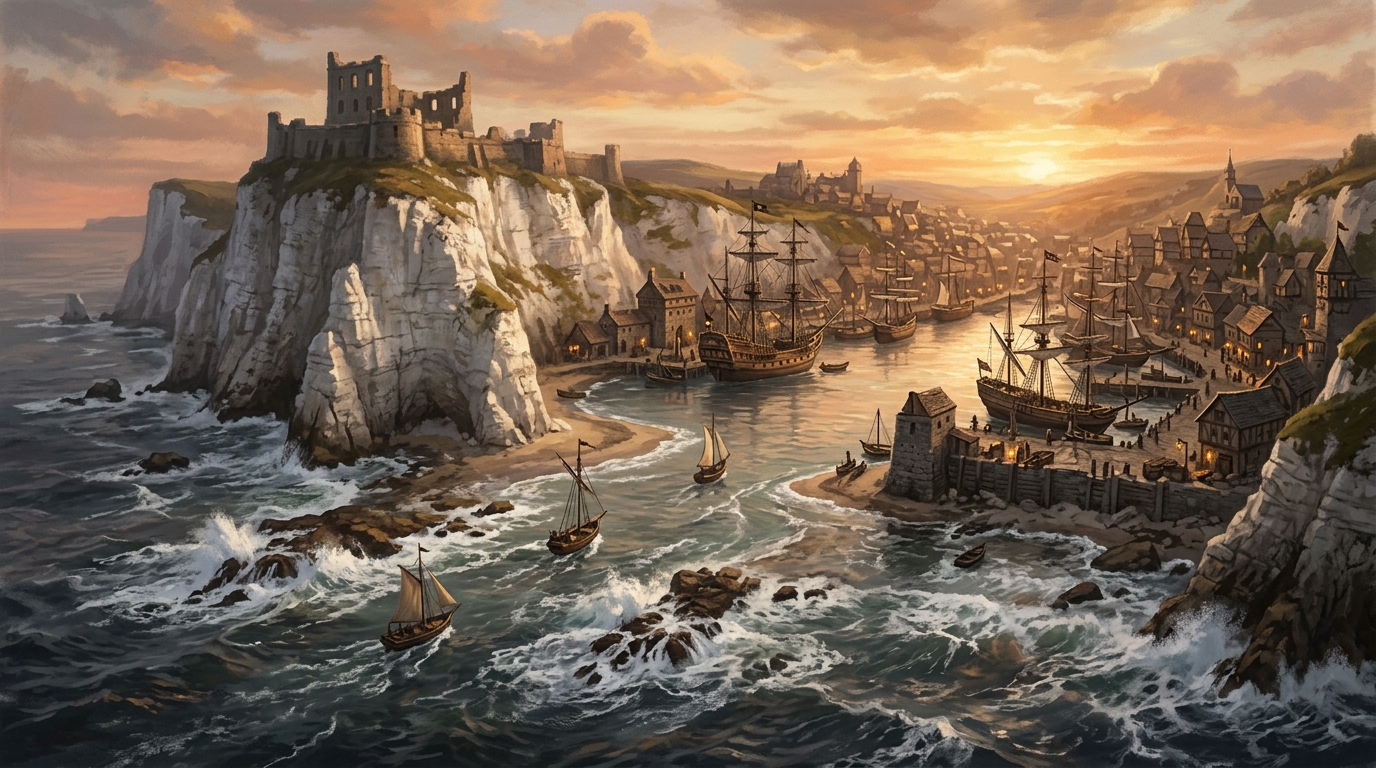
Why many pirate ports blur together
Most pirate campaigns build a chain of islands that differ only in name and shop inventory. The harbour master offers the same services, charges the same prices, and posts the same style of job. When every port exists to refuel the crew and hand out the next hook, the sea loses scale and sails feel like loading screens between fights rather than choices about where to risk the ship.
A port becomes memorable when it has a reason to exist, local people already shaping its fortunes, and a visible state that changes while the crew is away. That takes only a few details: what draws ships to this bay rather than the next, how the island works beyond the quay, who controls which parts of port life, and what opportunity or danger waits nearby. With those in place you can revisit the same harbour and find that time has moved on.
Start with the island, then place its ports
Before designing a harbour, ask why ships come to the island at all: shelter, fresh water, repair timber, passage through a strait, trade, secrecy, extraction, strategy, pilgrimage, or politics. It may be an uninhabited anchorage, a quarantine or prison island, a seasonal rendezvous, or a large island with several settlements and rival ports. Give the chosen landing place a physical reason to matter: sheltered water, deep anchorage, a river mouth, a crossing point, reliable water, access to inland production, or the only lee shore in the prevailing wind. Some harbours are built or defended despite poor geography; make that cost part of their identity.
Mark where ships can actually land or anchor: deep harbour, exposed beach, mangrove creek, lee shore, or a reef passage. Then choose one feature that makes crossing or controlling the island difficult, such as a ridge, marsh, jungle, cliff road, or volcanic ground. Note when weather, season, or tide changes access. A monsoon closes the outer anchorage, a dry season empties the springs, or a reef passage is safe only at high water: one clear constraint is enough. Finally, place one or two things away from the port, such as a village, spring, plantation, fort, cave, shrine, signal tower, or hidden anchorage on the far coast. On a larger island, connect the harbour, interior, and secondary coast as a simple pointcrawl, with routes and obstacles between them.
Seven details that make a harbour distinct
Prepare one sentence for each. If you cannot answer it, the port will still feel generic when the party docks.
- Identity and immediate problem Give the island or port a character in one line, then name one active pressure, dispute, or opportunity that locals are already responding to and a reason outsiders could change the balance. Two factions might be bargaining over scarce water; fishermen could be rerouting around a dangerous reef; smugglers might use a hidden channel but need more cargo capacity; a fort could be buying labour and timber after a storm; or locals might disagree over company protection. The crew enters a situation already in motion, not a problem waiting only for them.
- Who controls what? Split authority across the people who hold it. A governor may set law, a company factor collect tariffs and extend credit, a pilots' guild control navigation, a council decide harbour access, dock gangs enforce informal rules, and a temple command social legitimacy. Markets may set prices through scarcity and bargaining rather than decree. Choose only the powers that matter here, and show where they overlap or clash.
- Landmark and navigational signature Choose something a sailor remembers and can use to navigate: bleached cliffs shaped like a jaw, a ruined lighthouse that flashes on storm nights, a mangrove channel passable only near high tide, or a reef that sings in the swell. Give it a local name and one practical consequence. If the crew must time the tide, follow a lead line, or risk the reef to avoid patrols, the landmark becomes a decision rather than a description.
- Economic role and key trade Decide how the place earns or holds value. It might export salt, import grain, and lack fresh water; it might instead be a transshipment hub, repair or careening centre, crew market, prize exchange, financial house, military resupply point, convoy rendezvous, pilgrimage centre, or neutral meeting ground. List what a ship can get there: safe anchorage, repairs, powder and shot, water and provisions, crew, pilots, medical care, prize buyers, forged papers, intelligence, legal protection, or discreet storage. Two ports with similar goods play differently if one repairs hulls but asks questions and another fences prizes but cannot replace a mast. Add a shortage or scarce advantage and who benefits from it.
- Rumours, treasure leads, and local conflicts Attach rumours to named tellers and prepare one or two active tensions: what each side wants, what it will do next, and what visible change follows if no outsider intervenes. A rumour that the old fort hides a pay chest, repeated by the chandler who wants the garrison evicted, is more playable than an anonymous treasure map. The crew can join, exploit, negotiate around, ignore, or accidentally reshape the dispute.
- Nearby adventure sites Place two or three sites on the island or within a day's sail: a ridge fort, freshwater spring, interior village, abandoned plantation, cave network, signal tower, old road, mountain shrine, far-coast anchorage, hidden cove, reef wreck, or lagoon where ships careen. For larger islands, link the harbour, interior, and secondary coast as a pointcrawl. Give each site a reason it remains and a danger or route choice that makes reaching it matter.
- What changes when the crew returns Track the active pressure, factions, and scarce resources. When the crew returns, update them for what the crew actually changed and what happened while they were away: who gained or lost leverage, what resource or service became easier to get, what route or rule shifted, and who remembers the crew. A new flag over the fort, a guarded well, or an empty chandler's shop makes the change visible without a briefing; note likely consequences, not a branch for every possible choice.
Build trade so every port needs another port
Distinct economies and services turn a chain of islands into choices about where to sail next.
- Name the imbalance, not just the goods For a production port, name one surplus locals are keen to sell and one shortage they resent. Greytide exports timber and turtles but cannot hold powder after the magazine flooded. Saltmouth imports grain and exports salt, but its wells fail every dry season. A shortage the crew can fill, and a surplus they can carry to the next harbour, makes sailing between ports feel like problem-solving rather than stocking up. For a service or strategic port, name what it handles, repairs, protects, connects, or keeps secret instead.
- Connect the imbalance to a controller Someone benefits from that shortage or controls the surplus. A company holds the powder charter, a navy controls the strait that timber must pass through, or a local council restricts who may fish the lagoon. When the crew knows who controls movement of goods, they can trade, smuggle, negotiate, or raid with a clear sense of who profits and who complains.
- Show the price at the quayside Pick two prices that have visibly shifted because of the local situation, not a full ledger. Timber dear after the fort burned, fresh water dear in the dry months, sugar cheap because no buyer has called for a fortnight. Players read an economy through what they can see on the harbour, not through a briefing about trade theory.
- Let reefs, wrecks, and channels shape the route Use navigational features and seasonal conditions to make trade a sailing problem as well as an economic one. A rich market may lie behind a reef that only a local pilot can read, a cheaper cove may demand a tide window the patrol knows, or a wreck that marks a safe channel may have been looted for its beacons. A seasonal wind can close the route or make the island's storm anchorage invaluable. The safest profit is rarely the largest, and that trade-off belongs on the water.
Connect coves, wrecks, and ruins to the island and harbour
A cove, reef, wreck, or inland site earns its place when it changes how the island or port works. A cove that lets smugglers bypass harbour dues explains why the governor posts cutters at the headland. A reef that wrecks company ships explains why powder is scarce and why the company pays for a pilot. A ruin on the hill that locals avoid explains why the temple still collects harbour tithes to keep watchers there. A spring inland may be the island's only dependable water, giving its keepers leverage over every settlement. When a site explains a quayside price, local rule, route, or service, the world feels connected without extra lore.
Keep each site to three facts: what it offers, why it is still there, and what makes reaching it a choice. A careenage beach offers a place to repair unseen but lies under mangroves where fever lingers. At the Saint Elmo, the flood tide sweeps small boats across the outer reef; a local pilot can pick a safer line at slack water. A ruined battery watches the channel but its magazine leaks and smokes. Players remember places that make them weigh route, risk, and reward, not ones that only need a note on a map.
Example
Worked example: the same harbour before and after the framework
The crew needs to sell a modest prize and take on water before chasing a rumour of a wreck to the east. The GM offers one island port. Compare a thin resupply stop with the same harbour built from island geography, identity, trade, landmarks, and return consequences.
- The resupply version
- Saltmouth is a general pirate port. The harbour master charges standard rates for repair and provisions, the tavern keeper offers a generic map to treasure, and two merchants buy cargo at the usual price. The crew sells, buys, hears the hook, and leaves. When they return three sessions later, the same harbour master quotes the same prices and offers a new hook that replaces the last one. The port had no reason to remember them.
- The anchored version
- Saltmouth sits behind white cliffs called the Jaws, visible a league off. Its sheltered bay is the only deep anchorage between Grey and Long Reach, but the bar carries enough water for deep-draught ships only around high tide. The town exports salt and salted fish, imports grain and powder, and lacks reliable fresh water in the dry months. The Company factor, Mistress Varl, holds the powder charter; the fishing elders inspect water casks and collect the well tithe; Old Joss and the pilots control safe passage over the bar; and the navy's cutters enforce the crown's claim to the strait. Fresh water is dear, powder is dearer, and salt is cheap because no grain convoy has arrived for a fortnight. Ships can buy provisions, hire a pilot, and hide for careening at Ash Cove to the north, though fever is common there. Inland, the ruined battery on Widow Hill still watches the bar, and its old magazine leaks smoke on damp nights. Beyond the outer reef, the Saint Elmo's leaning spar marks a wreck said to hold a pay chest; at flood tide the current sweeps small boats across the reef, while a local pilot can find a safer line at slack water. Saltmouth's people are already debating whether to accept company protection while the fort is repaired. Varl's clerk says the wreck's chest could fund a new well and will pay for a diver; Old Joss claims the company missed the grain convoy deliberately to force the town to sell the battery hill, and will guide a crew through the bar at night for a share.
- On return
- When the crew returns, update the protection debate, water supply, powder charter, and pilot relationships for what they changed and what happened while they were away. If they secured the chest, perhaps the new well is being dug and Varl has gained support; if they exposed the missed convoy, the elders may have refused company protection and the navy may now inspect every vessel. If they pursued another lead, the town still made its own choice: a company flag may fly over the battery, the well tithe may have risen, or the reef markers may have vanished. Show the result in the people, prices, services, and routes the crew encounters, without needing to write a separate branch for every choice.
- Why it works
- Every part of Saltmouth does double duty. The cliffs and bar turn entry into a tide choice, and the deep anchorage explains why ships use this bay. Trade, water, protection, and pilotage put different people in control of different needs. The cove, wreck, and battery connect island geography to services and faction tensions. Because the GM tracks the active pressure, resources, and relationships, the next visit carries the weight of the crew's decisions and the time since they left.
Before the crew next makes harbour
Run through these checks for each island or port on the current chart.
- Why do ships come here, and what physical feature makes this landing or anchorage useful?
- Where can ships land, what makes the island hard to cross, and what changes with tide, weather, or season?
- What landmark do sailors name first, and what navigational choice does it force?
- Who controls law, access, pilots, services, trade, violence, and social legitimacy?
- What is the place's economic role, what can a ship get here, and what is scarce?
- What pressure is already in motion, what do the sides want, and what will they do next?
- Which inland, same-island, or nearby sites connect to the port, and what makes reaching each a choice?
- What changed while the crew was away, and who gained leverage or remembers them?
A reusable island and port profile
Use the fields that matter; a small anchorage needs fewer notes than a large island with several settlements.
- Why ships come ____________________
- Approach and anchorage ____________________
- Seasonal constraint ____________________
- Island or port identity ____________________
- Active pressure ____________________
- Who controls what ____________________
- Economic role or key trade ____________________
- Ship services ____________________
- Scarce resource ____________________
- Landmark ____________________
- Nearby and inland sites ____________________
- Current faction tension ____________________
- What may change before the crew returns ____________________
Was this useful?
Keep islands, ports, and sea routes connected
Save each island and port as a location with its reason for ships to come, approach, seasonal constraint, landmark, economic role, ship services, and scarce resources. Link harbours to the people who control law, access, navigation, trade, and local legitimacy, along with the inland and offshore sites that connect to them.
When the crew sails, the same graph carries distance, tide windows, seasonal routes, and control of the strait into the next session. A return visit can show a new flag over the battery, a missing pilot, or a changed water supply without rebuilding the world from memory between sessions.
Generate a harbour townRelated
Tools
- Settlement Generator Build island harbours, port towns, and hidden coves with trade, law, pressures, and nearby dangers.
- Faction Generator Create the trading companies, naval squadrons, and rival crews that set local law and control straits.
- Rumour Generator Draft treasure leads and harbour gossip tied to named tellers and local conflicts.
- Ship Generator Give rival captains and harbour patrols a vessel players can recognise from the Jaws to the bar.
Guides
Other answers
- How do I make rival captains, navies, and pirate factions matter?
- What kind of ship should a pirate crew start with?
- How do you make travel interesting in a tabletop RPG?
- What should an RPG settlement contain?
- How do you create a fantasy city that feels alive?
- How do you generate useful RPG rumours?
- How do trade routes shape cities and kingdoms in an RPG world?
- How do I decide what a settlement produces, imports, and exports?
- How do I build a believable economy for a fantasy world?
- How do scarcity and shortages affect prices and conflict in an RPG world?
- How do you build a point crawl for an RPG?
- How do you run factions in a sandbox campaign?
- How do I run ship-to-ship combat without sidelining half the party?
- How do I make sea travel interesting in a TTRPG?
- How do I run a pirate campaign that feels like exploration rather than a series of naval battles?
- What TTRPG should I play for a pirate or high-seas campaign?