Framework
How do I handle players who keep trying to recruit defeated enemies?
Surrender is not allegiance. A captive who stops fighting has chosen survival, not loyalty, and a social check does not automatically rewrite their convictions or establish loyalty. Having a captive act on established motives is fair when you have shown the warning signs, given the party a real chance to earn trust or strike a bargain, and let different captives respond in different ways.
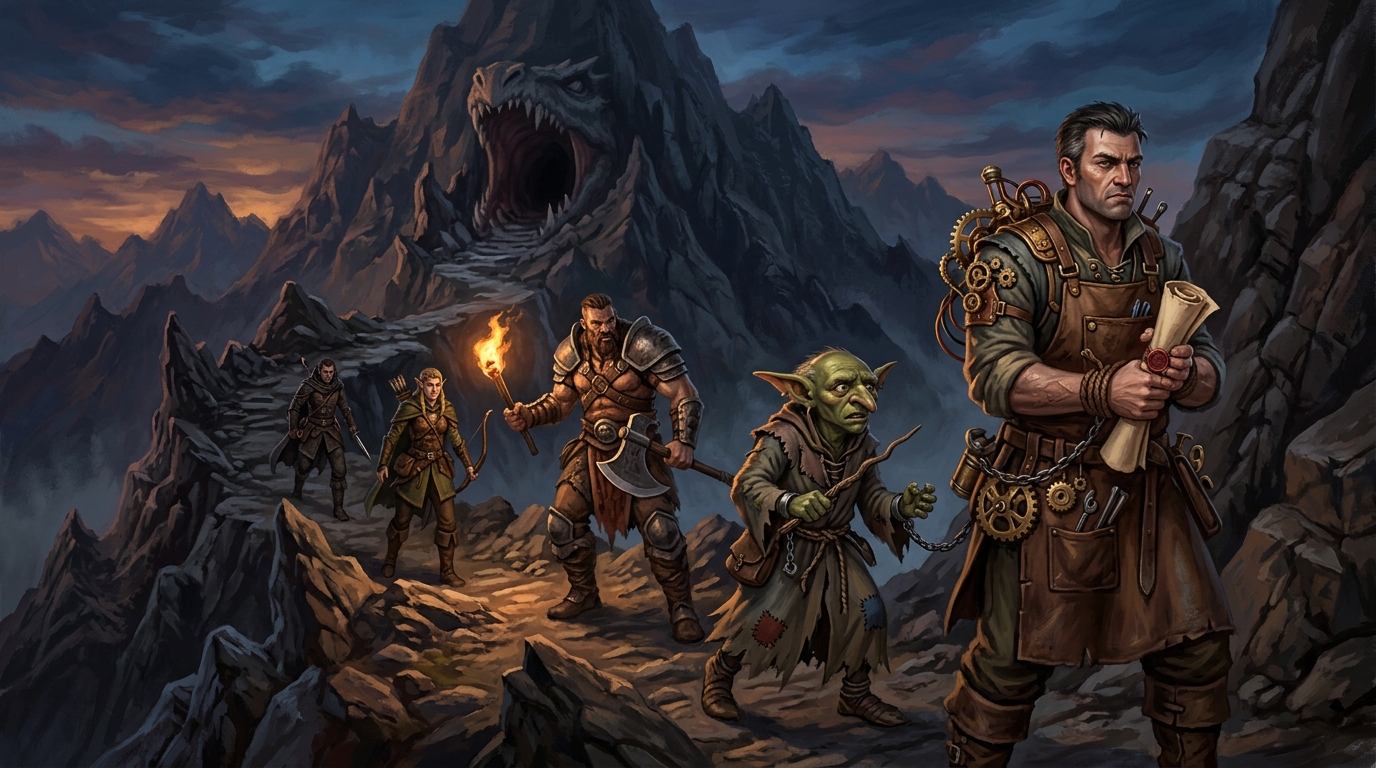
Surrender is not allegiance
Would it be unfair to have a press-ganged captive turn on the party at the dragon's lair? Not necessarily. It is fair when the turn follows motives the players have already seen, when you signalled the risk before the decisive scene, and when the party had a genuine chance to change the outcome by earning trust, offering a bargain the captive could accept, or choosing not to bring an unwilling prisoner into a fight they were never going to join. It becomes a gotcha when the betrayal arrives without warning, ignores everything the party did to build trust, or exists only to teach the players a lesson.
The habit to break is treating one successful conversation as a permanent change of side. A defeated enemy who talks, walks with the party, or even helps carry supplies may still resent the people who captured them, still fear the dragon they serve, and still plan to leave at the first safe moment. Reluctant compliance looks like loyalty from the outside. From the captive's side of the rope, it can feel very different, and the game stays fair when that difference stays visible at the table.
Separate captivity, cooperation, and commitment
These describe different parts of a captive's situation, not exclusive stages. Someone can remain captive while cooperating; loyalty and changed convictions can develop independently.
- Captured or surrendered The NPC has stopped fighting because continuing would mean death, capture, or worse. They want to survive the next few minutes. They have not agreed to help, and they may say whatever keeps them alive, including things they do not mean.
- Temporarily cooperating The NPC may do a limited thing for a limited reason while still captive: answer questions to avoid harm, guide the party past one checkpoint for safe release, or keep quiet while the party deals with a common enemy. Cooperation has terms; when they run out, so may the help.
- Genuinely loyal The NPC now wants the party to succeed and will take risks for them without being watched. Loyalty of this kind usually grows from repeated fair treatment, shared danger handled honestly, or a cause the NPC has come to share. It is not produced by a single conversation at swordpoint.
- Morally changed The NPC's convictions have changed after experiences that challenged them, not merely pressure to say new words. A changed view of a contract is a change in commitment; it is not, by itself, moral reform. A captive can cooperate for months without either change.
Use these as separate questions, and update your read as motives, circumstances, and player choices change.
What a social check can and cannot change
Use the procedure for the game and edition you are running. A check does not automatically rewrite convictions or establish loyalty:
- A high roll improves the offer, not the person A strong Persuasion roll can make a request sound reasonable, lower the price of a limited favour, or convince a wary captive that the party will keep a stated promise. It does not automatically rewrite an artificer's convictions about her contract or erase a captive's memory of threats.
- Intimidation buys compliance with an expiry date A threat can produce quiet obedience while the threat is present and credible. Expect the obedience to weaken with distance, opportunity, or a stronger fear on the other side. A captive who obeys because she is frightened has given you information about what she fears, not evidence that she agrees with you.
- Repeated rolls are not repeated chances to wear someone down Follow your game's procedure for another attempt. When it allows one, ask what has changed: a better offer, new information, proof that a promise was kept, or a shift in who holds power.
- Set the boundary before the roll Say what is actually at stake. For example: she might agree to stay out of the fight, but she will not attack the dragon she serves. Roll to see whether she accepts the narrower deal and what it costs. The players then make an informed choice, and a success means something specific instead of everything.
A short NPC decision card
For any captive the party keeps, jot down these seven prompts. Treat the likely move as a provisional read: when an opening appears, reassess it against current motives, circumstances, and what the players have done. The card guides play; it does not script it.
- Wants What the NPC is trying to get now. Freedom, safety, payment, revenge on a rival, a way home, protection for someone else.
- Fears What they are trying to avoid. Death at the party's hands, punishment from their employer, disgrace, harm to family, being trapped with no exit.
- Owes loyalty to A person, contract, god, gang, family, or nobody at all. Note whether the tie is affection, habit, money, oath, or fear. Each tie breaks, or holds, for different reasons.
- Will do under pressure The limited help fear or payment can reliably produce. March without resisting, answer direct questions, stay silent, carry supplies, point out one danger.
- Line pressure alone is unlikely to cross An action they are unlikely to take without a genuine change: attack their employer, betray a named person, break a sworn contract, lead the party to their own kin.
- What could earn trust A specific, observable act. Kept promises, release without conditions, healing without demanding payment in service, protection from their old employer, a share of loot given freely.
- Likely move when an opportunity appears What they might do when an opening appears. Reassess as the situation changes; unexpected player choices can change the likely move.
Give the players choices that can actually work
Recruitment is one option among several, and it is often the hardest. Put the other options on the table in the fiction so the players are choosing, not guessing:
- Release the prisoner Let them go, with or without conditions. Release can earn goodwill, remove a liability before a dangerous fight, and show other NPCs that surrender to this party is survivable. That reputation matters the next time an enemy considers laying down arms.
- Negotiate a limited truce Agree on a narrow, time-bound deal: safe passage for information, a head start in exchange for staying out of the next fight, no pursuit for one day. Limited deals suit captives who will never join the party but can honour a bargain that serves them too.
- Strike a deal that serves both sides Pay, protect, transport, or remove a threat the captive also wants gone. A deal works when the captive gains something they value without having to pretend loyalty. Check the decision card: the offer has to speak to what they want or fear.
- Hold something they value, and name the cost honestly Keeping a weapon, a contract copy, a mount, or knowledge of a hiding place can secure short-term cooperation. Name it as pressure, not friendship. The captive will behave like someone being pressured, including looking for the moment the pressure lifts.
- Offer a longer path to change If the players want genuine loyalty or a real change of heart, give it time and tests: fair treatment across several scenes, a kept promise when keeping it costs something, a chance to leave that they decline. One good scene can start that path. It rarely finishes it.
- Accept that this NPC stays hostile Some captives will not be talked round, and that is a valid result. Hand them to local authority, leave them secured and supplied while the party moves on, or let them depart as an enemy who now knows the party's faces. A clear no is more useful at the table than endless renegotiation.
Example
At the dragon's lair: three signposted outcomes
The party approaches a dragon's lair with two captives. The goblin wizard was captured after fleeing and has marched under threat; the artificer serves the dragon under a binding contract. Both asked for release, and neither agreed to fight. The artificer's contract forbids attacking the dragon but permits neutral guidance to the entrance. No bargain has been offered yet, though the players expect help in the fight. Resolve each captive from her motives and the actual terms, not alignment alone.
- The artificer holds her contract
- She has asked to be left outside, corrected a player who called her an ally, and kept her tools packed when fight roles were assigned. If left outside, she refuses to fight and keeps to herself. If the party forces her inside, she may step away or take the dragon's side only if she has a real chance to do so. Her refusals and contract made the risk clear. A bargain to guide the party to the entrance, stay out of the fight, and leave free with payment fits the contract she described.
- The goblin looks for the exit
- She never agreed to fight a dragon. If she is unbound and a distracted guard or nearby exit gives her a chance, she slips away; if still restrained or watched, she hides or freezes rather than acting for either side. A bargain for safe release and payment may keep her neutral, but healing alone does not make her risk a spell for the party.
- What changes if the party earned it
- Suppose the party heals the goblin without asking for service, returns the artificer's tools, and offers both the same written deal: guide them to the entrance, stay out of the fight, then leave free with payment. The contract explicitly allows the artificer's neutral guidance, so she can honour both commitments. The goblin accepts for safety and payment and stays neutral; the healing may improve trust, but neither captive has become loyal. If the party later changes the terms or circumstances, reassess what each can and will do.
Consequences are not the same as punishment
An unwilling captive who flees, stalls, bargains with a rival, or helps against a common enemy is producing a consequence of how they were treated and what they want. Keep that separate from a punishment beat you aim at the players:
- Let the motive decide the move Use the card to predict what this opening makes possible, then update that prediction for the current situation and the party's choices. A decision that follows established motives can still surprise you.
- Telegraph before the decisive scene Use camp scenes to show a refusal, a flinch at the employer's name, a question about consequences, a tested rope, or attention to the road. These signals help the party judge risk; their choices can still change what follows.
- Do not make every captive betray the party Captives may flee, keep a useful bargain, stay neutral, or help against a shared threat if doing so serves them. Betrayal is one possible response, not the default.
- Different captives answer differently The artificer treats her contract as binding; the goblin wants to survive and get away. Alignment may suggest tendencies, but it does not decide either person's action.
At the table when it keeps happening
If every fight now ends with a tied-up prisoner and a long interrogation, say so outside the fiction. Ask the players what they enjoy about it: collecting allies, avoiding killing, looking for information, or testing how far persuasion can go. Agree on how your table will handle it. For example, one full conversation to establish terms, after which further pleading without new facts resolves in a sentence. That agreement protects the players' creativity while keeping the campaign moving, and it lets you spend session time on the captives who genuinely matter.
Handle captivity itself with care. Tying someone up and marching them along is already coercion; threats and pain do not become a reliable route to loyalty because a roll succeeded. If interrogation scenes drift towards torture, or if any player is uncomfortable with what the party is doing to prisoners, pause and talk about it directly. You can set a line together, move such scenes off screen, or change how surrender works at your table. A game where prisoners reliably become friends after being hurt teaches a lesson nobody at the table chose, so do not let the dice teach it by accident.
Before you bring a captive into the next big scene
Before the next big scene, check the card and the current fiction:
- What does the card suggest, and what has changed since you wrote it?
- Are captivity and cooperation both present? Have loyalty or convictions changed independently?
- Check what the party has actually offered or done: a kept promise, fair treatment, payment, release, or only threats. Let the captive's trust reflect that record.
- Before any social check, state the narrow deal on the table and the line that is not being rolled for. Roll only where the outcome is genuinely open.
- Plant or replay one clear signal of risk before the decisive scene: a refusal, a request to leave, contract talk, camp behaviour, or a tested rope.
- What options are physically possible from their location, restraints, and the party's actions?
- If interrogations are eating the session, agree with the players how repeated attempts without new facts will be resolved, and what captivity content stays off screen.
Was this useful?
Keep each captive's motives where you can find them
The decision card only helps if you can find it when the lair door opens. In Codex Cryptica, keep the card on the NPC's record and link the captive to the party, to the employer or dragon they serve, and to the location where they were captured. The links make divided loyalty visible at a glance: one glance shows who this person owes, who is pressuring them, and which promises the party has actually made.
After the session, update the card with any changed terms, commitments, or circumstances. The next captive conversation then starts from the record, not from memory.
Generate an NPCRelated
Tools
- NPC generator Create an NPC with a role, want, and boundary, then note what pressure can and cannot change before the party tests it.
- D&D NPC generator Generate a D&D-flavoured NPC with ancestry and hooks when a defeated enemy needs a name, motive, and line they will not cross.
- Faction generator Give a captive an employer, contract, or gang to owe loyalty to, so their refusals have a source the party can discover.